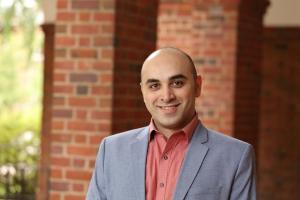
Majid Shafiee-Jood

About
Majid Shafiee-Jood is an Assistant Professor in the Department of Civil and Environmental Engineering at the University of Virginia. His research focuses on understanding how climate-related stressors such as flooding, sea level rise, drought, and infrastructure failures affect communities and how individuals, organizations, and governments make decisions under uncertainty. Working at the intersection of engineering, social science, and community-engaged research, he develops data, models, and decision-support tools that help communities better anticipate, prepare for, and respond to climate-related risks.
A central theme of his work is understanding how climate hazards translate into disruptions to daily life, including impacts on infrastructure, mobility, public health, access to services, and community well-being. His research also examines how trust, communication, and information influence decision-making during extreme events and how these insights can be incorporated into next-generation early warning systems and resilience planning efforts.
Shafiee-Jood collaborates closely with communities, local governments, non-profit organizations, and other stakeholders to co-develop solutions that are both scientifically rigorous and practically relevant. His current projects span rural coastal and inland communities and address topics including flood resilience, adaptive capacity, community-centered information infrastructure, climate-related infrastructure vulnerabilities, and decision support under uncertainty.
Before joining UVA in 2020, Shafiee-Jood completed his Ph.D. and postdoctoral training at the University of Illinois at Urbana-Champaign. He also holds M.S. and B.S. degrees from Sharif University of Technology.
Education
B.S. Civil Engineering, Sharif University of Technology, 2010
M.S. Civil Engineering, Sharif University of Technology, 2012
Ph.D. Civil Engineering, University of Illinois at Urbana–Champaign, 2019
I study how climate hazards translate into disruptions, how people and institutions respond, and how research can help communities make better decisions.
Research Interests
Selected Publications
-

UVA Engineering’s Majid Shafiee-Jood Helps Virginia Communities Be Ready for Rising Water
Read NowThis assistant professor of civil and environmental engineering leads a UVA team working with leaders in Southwest Virginia to better prepare for floods and other major weather events.
-
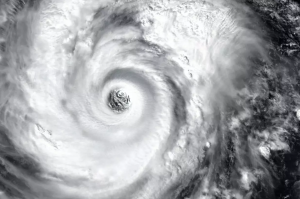
Why Gulf Hurricanes Threaten Virginia, Southeast
Read NowHurricane Helene made landfall in the Big Bend region of Florida, but has impacted thousand outside of the state. A UVA Engineering expert explains how and why this happens.
-
UVA Engineering Hopes to Improve Hurricane Evacuation Orders
Read NowA new hurricane response data tracking system could help determine the right time to order evacuations to minimize disruption and economic costs while saving lives.