Academic Coaching
Meet one-on-one with a member of our Undergraduate Success team to identify your strengths and areas of growth. Meetings are free, unlimited, and can be scheduled anytime of the year. You can even meet with us when you take a break from school.
During a an academic coaching session, you can expect to meet with an equity-minded, strength based professional coach. We help you identify your barriers, explore strategies, and set goals to balance your well being and academic performance. We believe in your ability to succeed academically and want to provide you with the resources to achieve your goals.
After a coaching session, the hard work is up to you and we believe in your abilities. Knowing success takes a village, we may build out a personalized success team that involves other staff and faculty in our school and across the university (i.e. Center for Connection in Engineering, Engineering Career Development, Counseling and Psychological Services, Engineering International Programs, etc). This could include an email follow up or empowering you with the information to reach out to individuals directly yourself.
Schedule an Academic Coaching Appointment
If no times are available or you need to meet sooner, email your weekday availability to Lisa or Georgina directly.
Executive Functioning Skills
Executive functioning skills are essential for college success; they can be learned and strengthened so its never too late to get started! Start small, focus on one skill at a time, and remember that progress is more important than perfection. Consider using planners, calendars, reminders, study schedules, accountability partners, tutoring services, academic coaching, and all the amazing support services available to your through the School of Engineering and the broader University. The more consistently you use these tools and strategies, the more confident and successful you can become in managing the demands of UVA and meeting your academic and personal goals.
Techniques for organizing coursework, creating study schedules, and managing materials
Planning and organization skills help students keep track of coursework, manage deadlines, and stay on top of coursework throughout the semester. This can include using a planner or digital calendar to schedule assignments, creating weekly study plans, and keeping notes and course materials organized. Strong planning and organization skills reduce stress, prevent last-minute cramming, and make it easier to balance classes, work, and personal responsibilities. With the right tools and resources, students can develop routines that support consistency, focus, and academic success.
Enhance your planning and organization skills by:
- Starting the semester with a designated calendar or planner for classes and commitments
- Writing down assignments immediately when they are announced.
- Creating a weekly plan at the beginning of each week
- Breaking tasks into smaller steps with mini deadlines
- Setting aside regular time to organize notes and materials
Ask yourself:
- Do I have one place where I track all my assignments and deadlines?
- What is one small change I could try this week to feel more organized?
Tools for Planning & Organization: (some options are free and some are paid)
Methods for prioritizing tasks, using calendars effectively, and avoiding procrastination
Time management is the ability to plan and use your time effectively so you can complete tasks and meet deadlines. For college students, this means reducing procrastination, balancing academics with personal life, and using tools like calendars or planners to stay organized and prioritize tasks appropriately. This is a critical skill to develop, as most people struggle with the planning fallacy, a cognitive bias where individuals underestimate the time/costs of a project, which can lead to stress and missed deadlines. Using the appropriate tools and being self-aware about this bias can help build the skills students need for effective time management.
Enhance your time management skills by:
- Create a daily routine: Establish a regular study schedule with dedicated time slots for different subjects. Consistency builds good habits and makes it easier to stay on top of your workload.
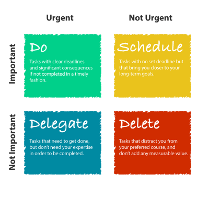
- Create a priority list based on due dates and importance, so you tackle the most pressing work first.
- Catch up on the weekend or other days off from class: Use time on the weekends or days off to focus solely on catching up with overdue work. Set aside a few hours to chip away at backlogged tasks without distractions from regular class hours.
- Reward yourself: Motivate yourself by setting small rewards for finishing tasks. It helps create positive reinforcement and makes the work feel more manageable.
- Track how much time it takes for you to complete projects.
- Keep an eye on the clock as you work through assignments/projects. This will help you improve your ability to plan future schedules with realistic estimates on how long any given task will take, rather than making a guess.
- This can help reduce the planning fallacy and Parkinson’s law, which states that the more time you allow for a task's completion, the more complex it tends to become. Having realistic time estimates is important in reducing both over and underestimating timelines for projects.
Ask yourself:
- What are my top priorities this week?
- When do I procrastinate and why?
- Am I using my time in a way that supports my goals?
- How long did it take me to complete a similar task?
Resources, Tips, Tools for Time Management:
- Pomodoro Technique https://www.todoist.com/productivity-methods/pomodoro-technique
- Eisenhower Matrix https://slab.com/blog/eisenhower-matrix/
- Set a realistic deadline.
- Use a timer.
- Use a Planner app.
- Calendar app (Google, Outlook, etc.)
- Physical whiteboard calendar
Tips for overcoming barriers to starting assignments and building momentum.
Task initiation is the ability to begin a task independently and without unnecessary delay, even when the task feels difficult, boring, or overwhelming. For college students, this skill shows up as starting assignments early instead of procrastinating, pushing past the “I’ll do it later” mindset, and taking the first step without needing last-minute pressure. It might look like opening a blank document and writing a rough first sentence, reviewing notes before studying, or beginning a project even when you don’t feel fully prepared. This skill matters for college success because getting started is often the hardest part; once you begin, it’s much easier to build momentum, manage your time effectively, and reduce stress from rushing to meet deadlines. Strong task initiation helps you stay organized, produce higher-quality work, and feel more in control of your academic responsibilities.
Enhance your task initiation skills by:
- Break assignments into small, manageable steps. Checking off smaller tasks on a list can help with a sense of accomplishment.
- Set a timer for 5–10 minutes to get started.
- Remove distractions before beginning work: Find a quiet workspace, put your phone on silent, and use tools like “Do Not Disturb” to avoid distractions while working. Studying with friends is fun, but if you know they will not hold you accountable, be proactive and plan accordingly.
- Create a consistent routine (start work at the same time each day)
- Focus on progress over perfection; starting imperfectly is better than not starting.
Ask yourself:
- What is the first small step I can take right now?
- What feels hardest about starting this task?
- Am I avoiding this because it feels overwhelming, boring, or unclear?
- How can I make this task feel easier or more manageable?
- What would “just getting started” look like (even for 5 minutes)?
- What distractions do I need to remove before I begin?
- What will I do if I get stuck?
- How will I feel once I’ve made some progress?
- What’s one thing I can complete today to move forward?
Resources, Tips, Tools for Task Initiation:
- Notion
- Todoist
- Pomodoro Technique
- Body-doubling
- Task chunking
- Use timings
- Use the 5-minute start: Commit to working on a task for just five minutes. Examples:
- Open the document and write one sentence.
- Read one page.
- Create the assignment heading and outline.
Guidance on when and how to seek academic, personal and social support from peers, faculty, and campus resources.
Help-seeking behaviors are the skills students use to recognize when they need support and to reach out in effective ways to get it. In college, this looks like asking questions during or after class, attending office hours, joining study groups, using tutoring centers, or talking to advisors and counselors when academic, personal, or social challenges arise. Students who use help-seeking behaviors understand that needing help is normal and take initiative rather than waiting until problems become overwhelming. This skill matters because college often requires more independence, and students who seek help early are more likely to understand course material, manage stress, stay connected, and succeed academically and personally. Learning how to ask for help builds confidence, improves problem-solving, and helps students make the most of the resources available to them.
Enhance your help-seeking behaviors by:
- Normalize asking for help: Asking for help is a strength, not a weakness.
- Pay attention to early signs you need help (confusion, falling behind, stress)
- Write down specific questions before asking for help.
- Visit professors or TAs during office hours.
- Join or form study groups with classmates
- Use campus resources like tutoring centers, advising, and counseling services.
- Accept help when it is offered to you.
- Build a supportive and trusting network of peers as well as professionals. Strong connections often reduce hesitation around asking for support.
Ask yourself:
- What usually stops me from asking for help (fear, time, uncertainty)?
- When was the last time I asked for help, and what happened?
- Do I know where to go for different types of support (academic, personal, social)?
- Am I waiting too long before reaching out for help? Why?
- How comfortable do I feel talking to professors, classmates, or advisors?
- What is one small step I can take this week to ask for help?
- Am I taking advantage of available resources like tutoring or office hours?
- What strategies worked well for me in the past when I needed support?
Resources, Tips, Tools for Help-Seeking Behaviors:
- Professors/TAs/Tutors, etc.
- Peers
- Academic Support Programs – Coaching, advising, mentoring.
- Counseling & Psychological Services
- First-Year Engineering Center
- Center for Connection in Engineering
Stress management techniques and resilience-building practices for academic and non-academic challenges.
Coping strategies are the skills students use to manage stress, handle challenges, and bounce back from difficult situations. For college students, this might look like taking breaks when overwhelmed, using healthy habits like exercise or sleep to recharge, talking to someone when things feel heavy, or using techniques like deep breathing or time management to stay in control. Students with strong coping strategies don’t ignore stress; they recognize it and respond in productive, healthy ways. This skill matters because college can bring academic pressure, social changes, and new responsibilities, and without good coping strategies, stress can quickly affect focus, motivation, and well-being. Developing these skills helps students stay balanced, build resilience, and continue moving forward even when things get tough.
Enhance your coping strategies by:
- Identify your common stress triggers (tests, deadlines, social situations)
- Practice simple stress-reduction techniques (deep breathing, stretching, short walks)
- Build a consistent routine that includes sleep, meals, and breaks.
- Break large tasks into smaller, manageable steps.
- Talk to someone you trust (friend, advisor, counselor) when you feel overwhelmed.
- Limit unhealthy coping habits (procrastination, excessive screen time)
- Try mindfulness or journaling to process your thoughts.
- Set realistic expectations for yourself and avoid perfectionism.
- Remember that challenges are temporary and part of growth, embrace a growth mindset.
Ask yourself:
- Who can I ask for help to handle this particular stressor?
- What situations or experiences tend to stress me out the most?
- How do I usually respond when I feel overwhelmed? Is it helpful or not?
- What are the early signs that I’m becoming stressed or burned out?
- What healthy strategies have worked for me in the past?
- Do I give myself enough time to rest and recharge?
- Am I balancing school, social life, and personal time effectively?
- What habits might make my stress worse (procrastination, lack of sleep)?
- How do I talk to myself during stressful moments; am I supportive or critical?
- What is one small thing I can do today to manage my stress better?
- Do I feel comfortable asking for help when I’m struggling emotionally?
- How do I recover after a setback or disappointment?
Resources, Tips, Tools for Coping Strategies:
- Academic advisors, coaches, mentors
- Care and Support Services (CASS)
- Counseling and Psychological Services (CAPS)
- Journal
- Take a walk.
- Go to the gym
- Listen to calming music
- Practice deep breathing
- Calm app
- Insight Timer
- Wellness apps
Frameworks for setting SMART goals and tracking progress
Goal setting is the skill of clearly defining what you want to achieve and creating a realistic plan to get there. A common approach is using SMART goals (Specific, Measurable, Achievable, Relevant, and Time-bound) which helps turn vague intentions into concrete actions. For college students, this skill shows up in setting targets like improving a GPA, finishing assignments early, applying for internships, or building healthy routines, and then regularly tracking progress to stay on course. Goal setting matters for college success because it builds focus, motivation, and accountability, helping students manage time effectively, reduce stress, and make steady progress toward both academic and personal goals.
Enhance your goal setting by:
- Write down 1–3 clear SMART goals for each semester or term.
- Break big goals into smaller weekly or daily tasks. Still use the SMART method for smaller goals or they can become too vague.
- Use a planner or digital tool to schedule deadlines and checkpoints.
- Track your progress regularly (weekly check-ins work well). Checklists can be very useful to feel a sense of accomplishment as you check things off, while allowing you to track progress at the individual step level.
- Adjust your plan if something isn’t working or priorities change.
- Celebrating small wins to stay motivated
Ask yourself:
- What exactly do I want to achieve, and why does it matter to me?
- Is my goal realistic given my current time and resources?
- Are my goals meeting all the criteria for a SMART goal?
- How will I measure whether I’m making progress?
- What obstacles might come up, and how can I plan for them?
- Am I staying consistent, or do I need to adjust my habits?
Resources, Tips, Tools for Coping Strategies:
- Digital planners (Google Calendar, Todoist, Notion)
- Physical planners, notebooks, etc.
- Reminder app
- Progress charts
- Checklists
- Set a recurring weekly/monthly date to check on goals and update them.
- Habitica