Human Technology Interaction
Improving humans’ ability to work effectively in complex technical systems.
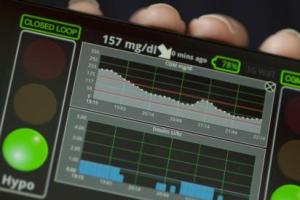
From faculty who specialize in human factors engineering to experts in building a superior autonomous vehicle, our Human Technology Interaction researchers investigate the complicated questions that arise when people interface with technology. When integrating human and machine intelligence, how do we know which one should be in charge when? How do we maximize the contributions of both? Can we imbue a machine with emotional intelligence, so it can use its cameras, sensors and algorithms to understand and act on what a human partner needs? Our researchers are asking these kinds of questions as they address challenges in areas such as haptics, autonomy and controls and control systems, risk and decision analysis, and human-centered computing.
Research Area Highlights

Multiple faculty and graduate students in the Department of Systems & Information Engineering (SIE) at UVa are conducting research on national security topics for defense and intelligence agencies. These include ONR, NRL, Air Force, and DARPA. Much of their work concerns human-technology interaction, which spans the human factors, robotics, and safety disciplines. The goal of this research is to make systems both safe and resilient—topics for which UVA Systems Engineering has a long history. Few (if any) modern complex systems operate without a person involved, with people often being the final decision maker or line of defense against failure: an arrangement that can both produce error or add resilience. To make effective choices, the person must fully understand the situation and how their decisions will affect the future.
Our collective efforts have focused on: (i) understanding human-system interactions to define system roles, boundaries, policies, and requirements; (ii) crafting user interfaces that use different sensory modalities (i.e., visual, auditory, and tactile) to most effectively convey information to people in dynamic environments; and (iii) building modeling formalisms, algorithms, and analyses that provide guarantees about safety, performance, and resilience during human-machine and human-robot interactions. With the rise and increased use of Artificial Intelligence (AI), human-technology interaction and the human’s role in systems engineering are being disrupted. This will result in unique risks and opportunities for system safety and resilience. Our team is well-positioned to address these challenges. This could include: developing novel means of explaining AI decisions to human users; designing human-appropriate, prompt-based specification languages to ensure accurate generative AI outputs; engineering interfaces to facilitate human-machine interaction and appropriately calibrated trust; and innovating new ways for humans to interact with and control machines.
Faculty involved in this research include Gregory Gerling, Matthew Bolton, Sara Riggs, and Tariq Iqbal, whose profiles appear below.
Human Technology Interaction Faculty

Gregory J. Gerling
My research interests span the fields of haptics, computational neuroscience, biomechanics, human–machine interaction, UX/UI, and human factors and ergonomics. We investigate cutaneous and proprioceptive cues that convey an object’s softness, and neural and biomechanical bases of social and emotional touch, and soft tissue manipulation or massage.

Sara Lu Riggs

Matthew Bolton
Dr. Bolton is an Associate Professor in the Department of Systems and Information Engineering at the University of Virginia.

Afsaneh Doryab
Afsaneh Doryab's research is at the intersection of ubiquitous computing, AI, HCI, and health. She works on computational modeling of human behavior (incl. Activity Recognition) from data streams collected via mobile, wearable, and embedded sensors.

Tariq Iqbal

Rupa S. Valdez

Laura Barnes
Laura Barnes is a professor in the Department of Systems and Information Engineering. She is the Associate Director of Link Lab and directs the Sensing Systems for Health Lab which focuses on designing impactful, technology-enabled solutions for improving health and well-being.

Reid Bailey
Reid Bailey is an engineering educator, designer, and scholar focused on engineering design education, systems thinking and analysis, & sustainability.
-

UVA Electrical Engineer Nikos Sidiropoulos Wins IEEE Fourier Award, Among Signal Processing’s Highest Honors
Read NowElectrical engineering professor Nikos Sidiropoulos was recognized for his work on multidimensional data — an area spanning streaming recommendations, cellphone connectivity and medical imaging.
-

Four UVA Engineering Faculty Earn NSF CAREER Awards
Read NowFour early-career faculty at the University of Virginia School of Engineering and Applied Science have earned prestigious National Science Foundation CAREER Awards.
-

Chen’s NSF CAREER Award Supports UVA Engineering Artificial Intelligence Research to Better Forecast Infectious Disease Epidemics
Read NowA UVA Engineering researcher is using AI to develop computational tools that improve infectious disease forecasting, guide public health decisions and strengthen disease surveillance.